
B2B sourcing guide - 10 min read
How Should I Store and Care for a Male Masturbator?
A practical storage and care guide for male masturbators: drying, pouches, temperature, dust protection, charging, inspection, and discreet organization.
SEO title: How to Store and Care for a Male Masturbator | LuxoVibe Guide Meta description: A practical storage and care guide for male masturbators: drying, pouches, temperature, dust protection, charging, inspection, and discreet organization. URL slug: /blog/how-should-i-store-and-care-for-male-masturbator Last reviewed: August 23, 2026
Quick answer
Store a male masturbator only after it is fully clean and dry, ideally in a clean pouch or case away from heat, direct sunlight, dust, and loose materials that could transfer onto its surface. Follow the manual for charging and removable parts, and inspect the item before use. A dry, protected, private location is usually the simplest solution.
Choose a storage location first
The best location is a place that stays dry, reasonably cool, and out of direct sun. A dedicated drawer, lidded box, or clean pouch can protect an item from dust and household traffic. Avoid bathrooms that stay humid, windowsills, cars, laundry areas, or locations close to heaters. Sudden temperature changes and prolonged heat can be hard on soft materials, adhesives, electronics, and rechargeable batteries.
Privacy matters as much as preservation for many buyers. Before ordering, decide whether you need a small pouch, a locked drawer, or simply a container that looks ordinary. Use a solution that makes it easy to return the product only after it is clean and dry. Concealment should never require putting a damp item into an airtight place.
The storage sequence that protects the product
Cleaning and storage are one process. First follow the maker's cleaning instructions. Then dry the outside and interior completely, keeping removable components apart if the manual calls for it. Once dry, place the product in its supplied pouch or a clean, lint-free storage bag. Keep the manual, charging cable, and any replacement parts together in a separate small compartment so they are not lost or pressed against the product surface.
Do not store soft sleeves loose beside items with dyes, rough edges, fragrance oils, or unknown residues. If you own more than one adult product, individual pouches help prevent surface contact and make the care routine easier to remember. A case can be useful, but it is not automatically the right choice when it traps leftover moisture.
Storage checklist
| Check | Why it matters | What to do |
|---|---|---|
| Fully dry? | Moisture can be trapped inside. | Air-dry according to the manual before closing anything. |
| Surface protected? | Dust and contact can affect the finish. | Use a clean pouch or separate compartment. |
| Temperature stable? | Heat can affect materials and batteries. | Keep away from sun, heaters, and hot vehicles. |
| Cable organized? | Loose cables can snag or damage contacts. | Store it clean and dry beside, not wrapped tightly around, the product. |
| Private enough? | Privacy supports consistent care. | Choose a drawer, box, or pouch appropriate for your home. |
Caring for charging and batteries
Electronic products need the storage limits in their manual. Use the supplied or specified cable, keep the contact area dry, and avoid charging on soft bedding or under covers. Do not leave an item charging unattended for long periods or keep a damaged cable in the storage case. If the manual gives a recommendation for periods of non-use, follow it rather than trying to maintain a charge by guesswork.
Before putting an electronic item away, make sure it is switched off and any travel lock is active if one is provided. If it will be unused for a long time, check the maker's battery-care directions. A swollen casing, unusual heat, or inconsistent charging is a reason to stop using the item and ask for support.
Troubleshooting storage problems
If a stored product has picked up dust, clean it as directed before use. If it feels sticky, has a changed texture, has developed an odor, or has visible cracking, stop and check the manual or contact the seller. Do not cover a problem with powder, fragrance, tape, or improvised repair. If the product was stored while damp, clean it again according to the instructions and give it a full drying period before deciding whether it is suitable to use.
Introduction
Buying a male masturbator is a personal shopping decision, so the useful questions are practical: what is the product designed to do, how is it made, what does daily care involve, and can the seller explain the details before payment? Product categories cover many shapes, materials, and price points. A clear listing and a modest, repeatable buying process are more useful than a dramatic claim about what one item will do for every person.
Read the complete product page rather than only the headline and lifestyle images. Look for a stated material, dimensions, charging or power method where applicable, the included accessories, care instructions, the seller's privacy information, and a way to get support. If a detail matters to your decision but is not stated, asking before checkout is sensible. A good answer should describe the specific product; it should not replace the manual with a vague promise.
What a clear product page should tell you
The most useful listings identify the body material and any removable component, show the controls or closure clearly, give dimensions, and explain cleaning and storage. If the item is electronic, the listing should also explain its charging cable, water-resistance limits, and whether a travel lock is available. Product photographs can make scale difficult to judge, so compare measurements rather than relying on terms such as compact or discreet.
Descriptions should separate features from outcomes. A soft finish, a textured sleeve, a compact case, or a quiet motor may be relevant design details, but they do not mean the same thing for everyone. Treat comparative phrases such as best, strongest, or silent as marketing unless the seller provides a specific, comparable basis. Independent reviews with dates, photos, and use context can add perspective, but they should be checked against the maker's own specifications.
Practical care and stop-use checks
Use the product-specific instructions first. In general, clean a suitable washable surface before and after use with the method specified by the maker, then allow it to dry fully before putting it away. Avoid harsh solvents, abrasive tools, or unlisted cleaners because they can leave residue or damage a finish. Never charge a product that is wet, and do not improvise with damaged cables or power supplies.
Pause use and contact the seller if a surface has tears or tackiness, a seam opens, an electronic item becomes unusually hot, a battery housing appears swollen, or a charging connection is loose. These are product-care questions, not a reason to guess. Keep the order confirmation, manual, and support correspondence so the model and purchase details are easy to identify.
Compare with confidence. If a product detail is unclear, contact LuxoVibe before ordering. Please share only the product or order information needed to answer your question; submissions are handled under our Privacy Policy.
A better way to compare options
Start by writing down three priorities: the form factor you can store comfortably, the material and care routine you can understand, and the amount you are willing to spend including delivery. Then compare two or three items intended for the same general use. This avoids a false comparison between a simple manual sleeve and a larger electronic device with a very different care routine.
Check the product page, manual, policy pages, and a small sample of detailed reviews in that order. When the sources disagree, ask the seller which document applies to the exact model and date of sale. Save screenshots or PDFs of key policy terms before paying, especially if delivery privacy, return eligibility, or warranty coverage affects the decision.
Build a decision from evidence, not pressure
Online retail pages are designed to make a choice feel immediate. Counter that pressure by separating information into three columns: facts the seller has stated, preferences that belong to you, and points that remain unanswered. Facts include the listed dimensions, material, included components, price, delivery terms, and written care limits. Preferences include drawer space, whether you value a compact case, the amount of routine cleaning you are willing to manage, and how important quiet ordering or travel storage is in your circumstances. An unanswered point is a reason to pause, not a reason to fill in the gap with an assumption.
It is also helpful to set a complete budget rather than looking only at the product price. Consider shipping, taxes where applicable, a storage pouch if one is not supplied, and the compatible care or lubricant product that the manual recommends. The lowest listed price may not be the most economical option if the listing does not explain what is included or if the seller's policies are hard to find. Conversely, a higher price is not proof of better fit. Documentation and support are part of value because they make the product easier to own responsibly.
When comparing materials, avoid treating broad labels as a full answer. Ask whether the seller identifies the surface that will be cleaned, the outer case, removable components, and any seal or attachment. A product image cannot establish all of those details. Good documentation tells you what the item is made from, how to care for it, and what not to do. If the manual is only supplied after purchase, ask whether a care summary can be provided first.
Keep product care separate from health claims
Consumer guidance should make product use more informed without making health, therapeutic, or guaranteed-performance promises. A seller can describe a product's stated features, material, controls, or care method. It should not present a personal product as a substitute for medical advice or claim that a particular format creates the same result for every individual. Personal comfort and preferences vary; choosing to stop, change products, or ask a qualified health professional about a health concern are all reasonable responses.
For shared use, plan hygiene and communication in advance. Follow the item-specific cleaning instructions, clean between users or body areas when relevant, and consider a barrier such as a condom where appropriate for the product and situation. Change the barrier between users or body areas. These are general safer-use ideas; they do not override the manual's material and cleaning limits. If you have an allergy, sensitivity, or health-related question, review product and lubricant labels and seek qualified advice rather than relying on a product review.
Make the after-purchase routine easy
The first few minutes after delivery can prevent later uncertainty. Confirm the model and included items against the order, read the manual before charging or washing anything, and keep the original packaging until you have completed that basic check. Decide where the item will air-dry and be stored before it is used. A clean towel, a designated pouch, and a dry drawer are simple preparations that make it less likely you will rush care steps afterward.
Create a small record that includes the order number, purchase date, seller contact route, and warranty or return link. It does not need to be elaborate. This record makes it easier to ask a factual question or report a problem without sharing extra personal information. Should a product arrive damaged, malfunction, or have unclear instructions, stop using it and contact the official seller channel with a concise description. Never attempt to open an electronic housing, use improvised parts, or make a return shipment before receiving instructions.
Image briefs
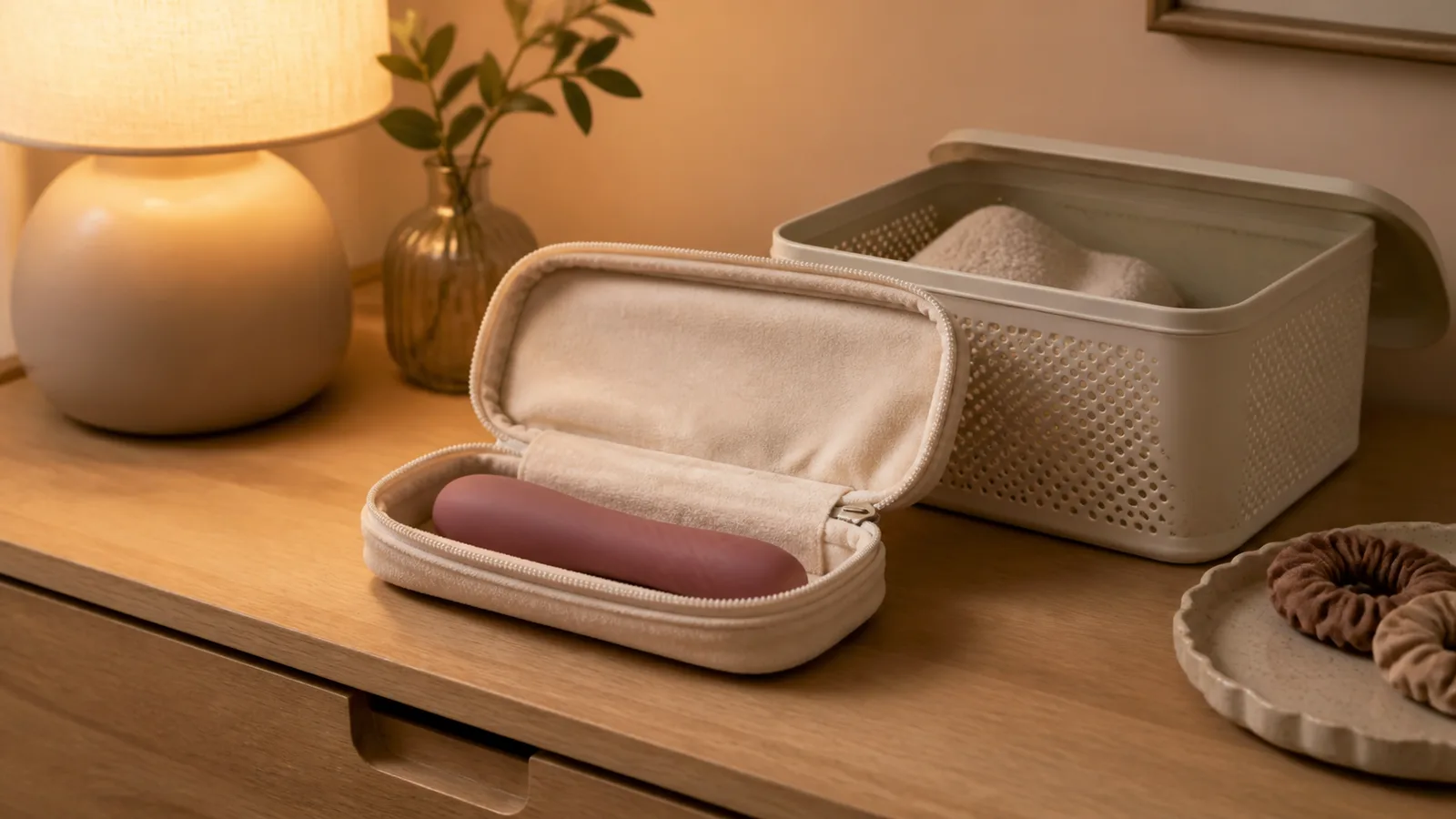
Image brief 1 - 1600×900 WebP Path: /images/luxovibe/blog-male-masturbator-storage-v1.webp Caption: A clean storage pouch and fully dry product support ongoing care between uses. ALT text: A clean male masturbator and breathable storage pouch arranged on a neutral shelf. Direction: A clean, editorial product-care scene with neutral surfaces, soft natural light, no people, no text, no watermark, and no visible brand mark.
Image brief 2 - 1600×900 WebP Path: /images/luxovibe/blog-male-masturbator-storage-v2.webp Caption: A tidy drawer setup keeps an item protected from dust, heat, and casual access. ALT text: A discreet drawer organizer with a personal wellness product, manual, and charging cable. Direction: A discreet consumer-shopping context using plain packaging and practical accessories; no text, watermark, or unverified logo.
Frequently asked questions
Can I keep it in the original packaging?
Yes if the item is completely dry and the packaging is clean, but follow the maker's storage guidance. A breathable pouch may be more practical for some products.
Is a bathroom drawer a good place?
Only if it remains dry and the product manual permits that environment. Humidity is a common reason to choose another location.
Should I leave the charger connected in storage?
No. Disconnect it and store the cable clean and dry unless the manual says otherwise.
Conclusion
Good storage is uncomplicated: clean the product, dry it fully, protect the surface, keep it at a stable temperature, and make privacy practical enough to maintain the routine. The most reliable choice is not necessarily the product with the longest feature list. It is the one whose fit, material, care instructions, privacy terms, and support route you can verify before purchase.
Need help choosing a product direction?
LuxoVibe can help clarify catalog information, material details, care documentation, and ordering questions before you decide. Browse the product catalog or contact the team. When using a contact form, include only the information necessary for the request; see our Privacy Policy for context.
Related resources
- Learn how to evaluate material and safety information.
- Review a practical guide to choosing a male masturbator.
- Before paying, read about confident online purchasing.