
B2B sourcing guide - 12 min read
How to Choose a Private-Label Adult Wellness Product Manufacturer: A B2B Buyer Checklist
Use this B2B checklist to compare adult wellness manufacturers, samples, quality controls, documentation, packaging, and shipment readiness.
Private Label & B2B Sourcing
Need a documented answer?
Ask one focused product or sourcing question.
Tell our team the exact model, market, material, care, packaging, or quantity detail you need to confirm. We will help route your enquiry to the right next step.
Choosing a private-label adult wellness manufacturer is not simply a price comparison exercise. The supplier will influence the product platform, materials, sample quality, packaging execution, documentation path, and the reliability of the first shipment. For a new brand or an established distributor, the right question is not "Who can make this item?" It is "Who can help us approve the right product, for the right market, with evidence we can review?"
This guide explains how B2B buyers can evaluate an adult wellness product manufacturer without relying on vague promises. It is written for teams sourcing rechargeable personal wellness products, gift sets, and retail-ready private-label collections. It is not legal or regulatory advice; destination-market obligations depend on the final product configuration and selling model.
The short answer: what should a buyer check first?
Start with five checks: product-market fit, sample quality, factory process visibility, product-specific documentation, and the supplier's ability to turn your logo and packaging brief into an approved bulk-production specification. A reliable project begins when the buyer and supplier agree on what will be made, how it will be checked, and what evidence is needed before shipment.
1. Confirm that the supplier understands your route to market
An adult wellness product that works for a marketplace listing may need a different product presentation from one intended for boutique retail, a distributor catalogue, or a premium gift collection. The manufacturer does not need to decide your positioning, but it should ask questions that make the product brief more precise.
Before requesting a quote, define the minimum commercial context:
- Target country or countries.
- Customer profile and intended retail channel.
- Product category and intended price position.
- Preferred materials, finishes, colour direction, and packaging level.
- Brand, logo, instruction-language, and discreet-shipping requirements.
- Estimated order range and desired launch window.
This information protects the project from the most common early error: selecting a product only because it looks attractive in a catalogue. A product platform should be assessed for physical dimensions, controls, charging method, packaging fit, customer use case, and the level of customization that is realistically available. When a buyer shares the market role of the product, a manufacturer can explain which features are standard, which are sample-stage choices, and which changes may affect tooling, documentation, or production planning.
Questions to ask in the first supplier conversation
Ask the manufacturer to describe the product in practical terms, not only marketing language. For example: What material grade is specified for the contact surface? What is the charging interface? Is the product assembled in-house or through a partner? Which changes can be made without changing the underlying product platform? What packaging components are required for the final retail set?
The answers do not need to be complicated. They do need to be consistent with the physical sample and the eventual specification sheet. A buyer should be cautious if the quotation, product image, and sample discussion describe materially different configurations.
2. Separate OEM, ODM, and private-label expectations early
These terms are often used loosely, which can create expensive misunderstandings later.
| Model | Practical meaning for a buyer | Typical decisions to clarify |
|---|---|---|
| Private label | An existing product platform is presented under your brand. | Logo, packaging artwork, inserts, carton labels, available colours. |
| ODM | The supplier's established product design is adapted within agreed options. | Functional options, finishes, packaging structure, sample approval process, ownership of the underlying design. |
| OEM / custom development | The buyer and manufacturer work from a defined custom product brief. | Design ownership, tooling, engineering scope, validation plan, change control, and commercial milestones. |
The important issue is not the label. It is the written scope. If a buyer expects an exclusive shape, a new control layout, or a custom charging solution, the project should not be treated as a simple logo application. Conversely, a ready product platform with custom packaging can be an efficient way to test a collection concept without assuming that every part of the product will be unique.
Ask for a simple change list at the start: standard, selectable, custom development, and not available. It makes later conversations about cost and timing much more productive.
3. Treat the sample as a decision record, not a photo opportunity
The sample stage is where a buyer can compare the sales concept with the physical product. A good sample review does not stop at "Does it look premium?" It should cover the use experience, finish, markings, packaging fit, and instruction content that will be approved for production.
Use a sample review sheet. It can be simple, but it should be dated and shared with the supplier. Suggested fields include:
- Product model, sample version, and review date.
- Surface finish, colour reference, and visible cosmetic standard.
- Button feel, charging connection, function sequence, and basic operating check.
- Product dimensions and the packaging insert fit.
- Logo location, print colour, artwork version, and carton marks.
- Required instructions, warnings, and language versions.
- Open points, owner, and approval status.
In a practical factory review, ask to see how a proposed change is recorded. For example, if a buyer requests a different finish or printed insert, the supplier should be able to show where that request will be reflected: the approved artwork, the sample change log, the bill of materials, or the final packing reference. This is less glamorous than a presentation deck, but it is the information that prevents "approved sample" from becoming an ambiguous phrase.
4. Ask how quality is checked during production-not only at the end
Every manufacturer will say that quality matters. A stronger question is: What is checked, when is it checked, and what happens if a check fails?
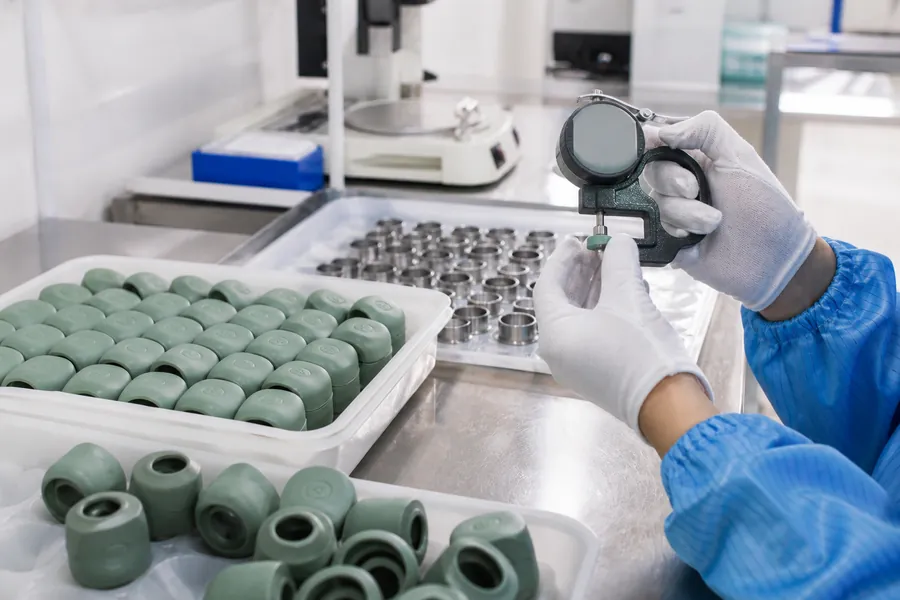
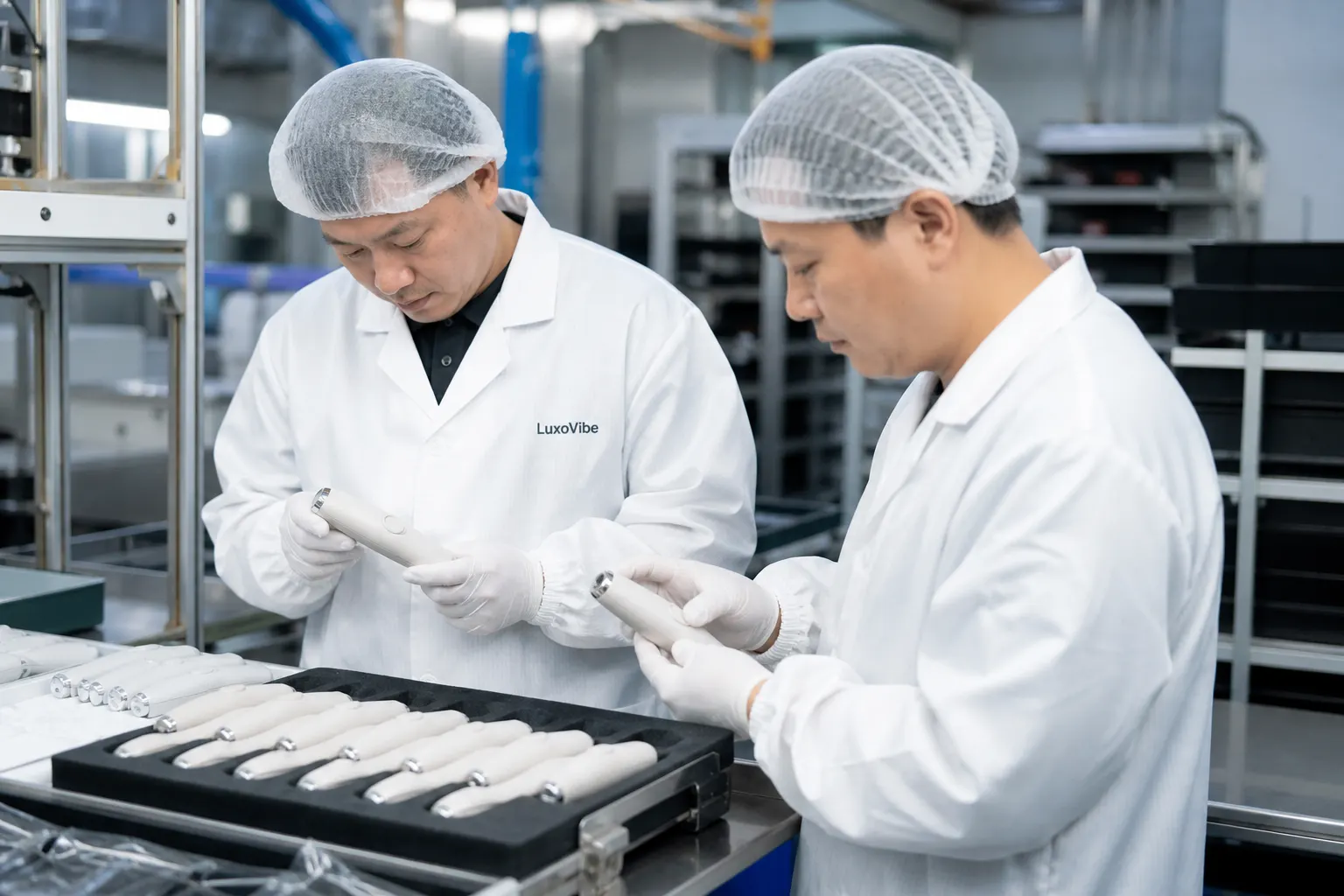
For a rechargeable personal wellness product, a project review may include incoming material verification, cosmetic checks during assembly, basic functional testing, charging or power verification where relevant, packaging confirmation, and final random inspection against the approved sample and packing standard. The exact process depends on the product and factory, but the buyer should be able to understand the control points.
Useful evidence to request can include:
- A current product specification or approved-sample record.
- A quality-control checklist appropriate to the product.
- Photos or video of the actual production or test station for the ordered model, when available and permitted.
- A clear method for separating non-conforming items.
- The final inspection scope, sampling approach, and report format.
Avoid asking a supplier to promise "zero defects." That is not a credible manufacturing commitment. Ask instead how it detects and documents issues before packing, how rework is controlled, and what information is available for a pre-shipment review. This produces a more honest discussion and a better basis for managing quality risk.
5. Match documentation to the product and destination market
Documentation should be discussed while the product brief is still flexible. For electrical or electronic products, requirements can depend on the final configuration, destination market, branding model, batteries or charging system, and sales channel. Material-related expectations may also vary by market and retailer.
The buyer's role is to state the destination and commercial route clearly. The supplier's role is to explain which records it can provide for the exact model and which work must be scoped before production. A responsible conversation distinguishes between:
- A document that applies to the exact final product.
- A component or material record that supports a product assessment.
- A general factory capability statement.
- A document that must be renewed, translated, or reviewed for a particular market.
For the EU, CE marking is a manufacturer responsibility under applicable harmonisation legislation; it is not a universal quality badge. The European Commission explains that the responsible party must carry out the relevant conformity assessment, create the technical documentation, issue the EU declaration of conformity, and then affix CE marking where the applicable rules require it. Rechargeable electrical products can also raise EMC and RoHS questions, while general product-safety and online-offer information must be considered in context. Work with a qualified market-access adviser for the final product and destination. European Commission CE marking guidance
6. Review packaging as part of the product, not an afterthought
Packaging changes the retail experience and can introduce production risk. A premium carton, inner tray, instruction booklet, charging cable, barcode label, and master carton all need to fit the approved product and the planned distribution channel.
When reviewing packaging, ask for a clear list of components and versions. This should identify the product colour, insert material, print finish, barcode location, carton marks, and the artwork file that is approved for production. If the product is intended for discreet retail or shipment, make that a written requirement rather than an assumption.
A useful packaging sample review includes three moments:
- Open-box review: Is the product secure, clean, and presented as intended?
- Information review: Are brand details, warnings, instructions, and product identification aligned with the market plan?
- Transit review: Does the retail pack fit the shipping carton and protective packing approach without avoidable movement or damage risk?
The best time to catch a packaging issue is before printed components are committed to bulk production. A single approved physical pack, photographed from multiple angles and linked to the final artwork, becomes an effective reference for both parties.
7. Compare quotations on scope, not only unit price
Two quotations can look comparable while covering different things. One may include a basic retail carton; another may assume the buyer supplies artwork or pays separately for packaging components. One may be priced for a standard product; another may include a modified finish, custom printing, or additional inspection. A buyer who compares only the unit price can miss the decision that matters.
Ask each supplier to state the basis of quotation:
- Product model and colour or finish.
- Included branding and packaging components.
- Sample scope and approvals required before bulk production.
- Quoted quantity range and any quantity-dependent changes.
- Incoterm, destination assumptions, and whether freight is included or separate.
- Documentation, inspection, and label assumptions.
- Payment schedule and validity period.
This is also the point to discuss whether the initial order is a market test or the start of a repeat program. A short run may optimise for speed and learning; a repeatable program may justify more detailed packaging controls or a broader product family. The supplier should not need to guess which one you intend.
8. Make pre-shipment inspection part of the plan
A shipment inspection is most useful when it checks the agreed standard rather than a vague idea of quality. Before goods are released, the buyer, supplier, or appointed inspection partner can compare sampled units and packaging against the approved product, artwork, and packing references.
A practical pre-shipment checklist can cover product count, model and colour, cosmetic condition, basic function check, accessory count, carton labels, outer-carton condition, and packing quantity. It should also record any observed issue and the agreed disposition before shipment. For product categories with particular transport or market requirements, add the relevant checks rather than assuming a generic checklist is enough.
The goal is not to create paperwork for its own sake. It is to give the buyer enough evidence to make an informed shipping decision and to create a reference for future repeat orders.
A supplier-evaluation checklist you can use today
Before placing a first order, confirm that you can answer "yes" to these questions:
- Does the supplier understand our target market and channel?
- Do we know which product elements are standard, selectable, or custom?
- Have we reviewed a sample or agreed a clear sample plan?
- Is there a written product and packaging approval reference?
- Do we understand the factory's relevant control points and final-inspection process?
- Have we requested documentation for the exact product and destination, rather than relying on generic certificates?
- Does the quotation state what is included and excluded?
- Do we have a realistic plan for shipping, inspection, and post-launch replenishment?
If any answer is unclear, that is not necessarily a reason to reject a supplier. It is a reason to resolve the question before confirming the bulk order.
FAQ
What should I ask an adult wellness product manufacturer before ordering?
Ask about the exact product configuration, customization scope, sample process, packaging components, quality-control points, available product-specific documentation, quotation assumptions, and shipment inspection. Give the supplier your target country, intended quantity, and retail channel so it can respond to the right brief.
Is private label the same as OEM?
Not always. Private label often uses an existing product platform with your brand and packaging. OEM may refer to production from a buyer-defined specification. The practical difference is the written scope of customization, ownership, validation, and tooling-not the label used in a sales conversation.
Should I approve a sample before bulk production?
For a new product, finish, or packaging direction, a documented sample review is a sensible control. It gives the buyer and supplier a shared reference for product appearance, function, materials, artwork, and packing details before bulk production is released.
Can a factory provide every certificate I might need?
No responsible factory should promise that without reviewing the exact product, configuration, destination market, and sales route. Ask what evidence applies to the product, what needs market-specific review, and which obligations belong to the manufacturer, importer, brand owner, or distributor.
What makes a quotation comparable between suppliers?
Compare the product specification, quantity, packaging, customization, inspection, documentation assumptions, and shipping terms-not only the unit price. A lower price can reflect a narrower scope rather than a more efficient project.
Conclusion
The most reliable private-label adult wellness project is built on visible decisions: a product brief that fits the market, a sample that records approval, a packaging reference that production can follow, and an inspection plan that supports the shipping decision. A manufacturer becomes a stronger partner when it can make those decisions clear rather than leaving them inside sales promises.
CTA: Request a buyer-ready project review
If you are sourcing a private-label wellness collection, send LuxoVibe your target market, product direction, estimated quantity, and packaging requirements. We can help you structure the next questions around an appropriate product platform, sample route, and quotation scope. [Get a Quote](/contact) or [Ask for the Product Catalog](/products).
Related resources
- Explore the LuxoVibe product catalog before narrowing a private-label platform.
- See the OEM and ODM development path for the decisions that move from a branded concept to an approved sample.
- Continue with our guide to sampling, packaging, and realistic MOQ planning.
- For destination-market context, review the European Commission's official CE marking guidance.

11 min read
CE, RoHS and GPSR for Rechargeable Adult Wellness Products: A Practical EU Market-Readiness Guide
12 min read
Factory Audit and Pre-Shipment Inspection Checklist for Private-Label Wellness Products

13 min read
From Product Brief to First Bulk Order: Sampling, Packaging and MOQ Planning for Private-Label Wellness Brands
Ready when you are
Get the product information your next decision needs.
Request catalog context, a specification check, or a private-label conversation from LuxoVibe.