
Consumer wellness guide - 12 min read
Silicone vs Stainless Steel Butt Plugs: What Buyers Should Compare
Compare silicone and stainless-steel butt plugs through exact material wording, construction, surface, handling, care, storage, and support records.
Materials, Cleaning & Storage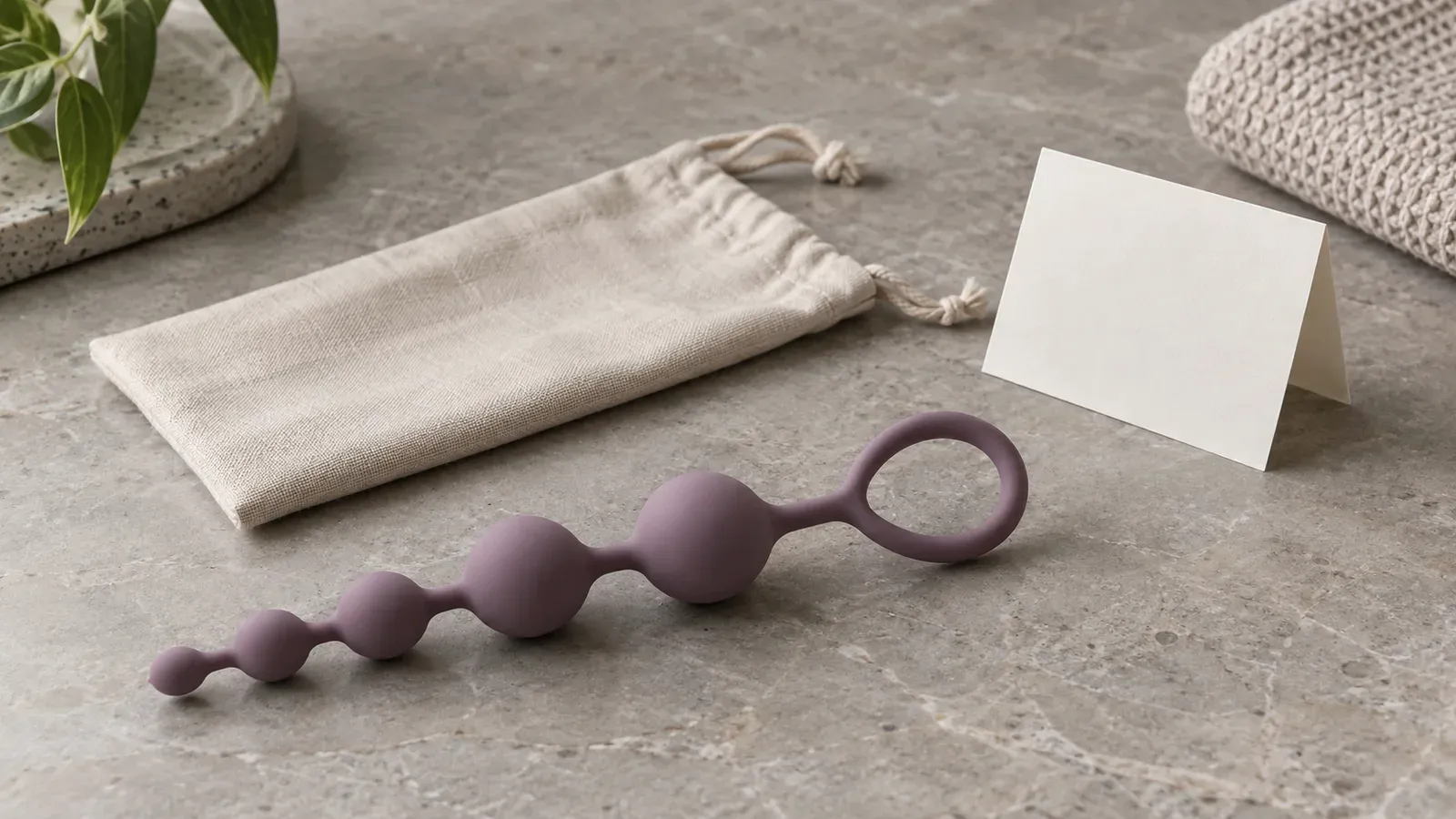
Need a documented answer?
Ask one focused product or sourcing question.
Tell our team the exact model, market, material, care, packaging, or quantity detail you need to confirm. We will help route your enquiry to the right next step.
SEO Title: Silicone vs Stainless Steel Butt Plugs | LuxoVibe Meta Description: Compare silicone and stainless-steel butt plugs through exact material wording, construction, surface, handling, care, storage, and support records. URL Slug: /blog/silicone-vs-stainless-steel-butt-plugs-material-comparison Last reviewed: October 9, 2026 Target keyword: silicone vs stainless steel butt plugs
Quick answer
A silicone-versus-stainless-steel butt-plug comparison should begin with the exact item's stated contact material, construction, surface condition, external safety feature, care directions, and storage requirements. Category material names alone cannot establish a model's composition, finish, compatibility, or suitability. Compare documentation and ownership work instead of expecting either material label to guarantee a result.
Introduction
Buying an adult-wellness product responsibly starts with the individual product record. Similar-looking products can have different dimensions, materials, finishes, base constructions, instructions, accessories, privacy practices, and return terms. This guide is intentionally practical and non-explicit: it helps adults ask for the right documented facts before checkout and before beginning an ownership routine.
The strongest evidence is current, model-specific information: the selected variant's listing, manual, care page, warranty, privacy notice, and official support response. Save the date of each record. Mark an assertion as confirmed only when a current source supports it; mark the rest as unclear. This prevents broad phrases such as "premium," "body-safe," "easy clean," "waterproof," "quiet," or "beginner-friendly" from turning into unverified promises.
Compare the documented object, not a material stereotype
Start by saving the maker's exact material words for the contact surface, base, coating, insert, seam, and any separate component. "Silicone" and "stainless steel" can describe different constructions across products, so a buyer should not assume an entire item is made from one material or that two products share the same finish. Ask the seller to clarify vague wording before treating a purchase-critical material claim as confirmed.
Planned Parenthood lists 100% silicone, hard plastic, stainless steel, aluminum, and break-resistant glass as examples of non-porous materials in its general educational guidance, while directing people to the individual product's care instructions. That context helps frame questions; it is not a substitute for a model's own documentation or a claim that any listing is body-safe, certified, or appropriate for every adult.
| Comparison point | Silicone item: verify | Stainless-steel item: verify |
|---|---|---|
| Material claim | Exact contact-surface and base wording | Exact grade/finish claim only if the seller documents it |
| Construction | Seams, joins, separate components | Surface, joins, coatings, separate components |
| Care route | Maker-approved cleaning and drying directions | Maker-approved cleaning and drying directions |
| Storage route | Separation, pouch, temperature guidance | Separation, pouch, temperature guidance |
Need one product fact confirmed before ordering? Contact LuxoVibe with the exact model and a focused question. Share only what is necessary for the reply; the Privacy Policy explains the inquiry-data context.
Let care instructions decide the practical difference
Material research is incomplete without the exact care route. Read the directions before selecting cleaners, lubricants, a pouch, or a storage location. Planned Parenthood notes that silicone lubricant can damage some silicone products and calls water-based lubricant a generally cautious option with toys and condoms; the relevant product and lubricant labels still control for a specific pairing. Never use a compatibility generalization as proof for a particular item.
Inspect a product's surface, seams, exterior feature, and any change in finish before and after cleaning. Stop using an item with visible damage, unclear care instructions, or an unexpected change, and ask the official seller for model-specific next steps. Do not try to repair a surface or test a cleaner on a product whose directions are unavailable.
Make a responsible decision when documentation is incomplete
Good research has a useful stopping rule. If you cannot identify the exact variant, the material statement, the written external safety-feature description, care boundaries, package contents, or the seller responsible for support, the record is incomplete. An incomplete record is not proof that the product is poor. It is a reason not to turn uncertainty into a claim. Ask one focused question, keep the reply with the listing, and consider another model if clear documentation remains unavailable.
Do not use broad consumer education as a substitute for item-specific directions. General sources can explain why material, cleaning, privacy, and seller terms are sensible decision points. They cannot tell a buyer whether the exact item in a current cart has a particular component, finish, permitted cleaning method, or warranty. The manual and the official seller are the appropriate sources for that level of detail. Where the listing and manual conflict, preserve both records and ask which current direction applies.
Avoid false precision. A retailer may provide measurements, material labels, feature names, and package lists, but those disclosures must match the selected variant and current offer. A product-family page can contain more than one construction. A photograph can show optional accessories. A review can describe a prior version. The useful comparison is therefore a dated, variant-specific record, not a collage of the most attractive claims from different pages.
The same discipline applies to delivery and after-sales support. Confirm the seller's identity, payment record, delivery estimate, privacy notice, hygiene-sensitive return conditions, warranty wording, and contact route before payment. Do not infer that a seller's general policy will cover an opened item, a delivery discrepancy, a defective product, or a change-of-mind return in the same way. Save the policy page as it appears on the purchase date, along with the receipt and any factual communications.
An arrival review should remain simple. Check the outer parcel and order identifier, compare the model and visible contents with the saved purchase record, read the included instructions, and note factual discrepancies. Keep the question narrow if support is needed: identify the order, model, component, and written statement that differs. This leaves a better evidence trail than speculation, alteration, or an online workaround. It also respects the fact that a seller can only resolve an issue accurately when the documented facts are clear.
Product content must not become medical or performance advice. No article can establish what will feel comfortable, safe, effective, or appropriate for a particular person. Stop product use and seek suitable professional advice for pain, persistent irritation, injury, a medical condition, pregnancy, recovery from a procedure, medication, disability, or any other individual health concern. This boundary makes the purchase guidance more trustworthy, not less useful.
A short pre-purchase review that prevents avoidable assumptions
Set aside a few minutes to review the same facts in one place before ordering. Read the selected variant title aloud against the cart, then match it to the saved specification and support link. Check that the material wording is specific enough to connect to care instructions. Check that the external safety feature is described in writing. Confirm the final cost and current delivery estimate. Review what information the website or related app asks to collect, and whether account, marketing, or location settings can be adjusted.
Next, identify the support path before it is needed. A useful path names the responsible seller or maker, an official contact method, and the order or model information that will be required. Keep the inquiry limited to the relevant facts. Never provide a password, full payment-card details, or unnecessary personal-health information to resolve a product-documentation question. If the support response does not answer the exact question or cannot point to a current source, leave that issue unresolved rather than treating a broad reassurance as confirmation.
Finally, plan ownership realistically. Read cleaning and storage instructions before deciding that a product fits a private routine, travel plan, storage space, or shared-use boundary. Plan a clean, dry place for the arrival review and for any maker-approved care. Follow the exact model directions, inspect visible components, and retain the manual. Careful preparation is ordinary product ownership; it does not imply a medical result, a factory test, a regulatory approval, or a promise that a product will meet every adult's needs.
Use customer requirements to ask a precise question
Customer requirements are easier to resolve when they name the exact version and decision. Instead of asking whether an item is "good," ask for the current source that states a precise fact: the selected variant's material, measurement, care route, supplied accessory, shipping estimate, return deadline, warranty scope, or support contact. A dated factual response is more valuable than a general reassurance because it can be checked against the listing and retained with the order.
This documentation-first approach also makes comparisons fair. Choose two or three products designed for a similar application and make a table with the same fields for each: exact model, variant, dimensions, construction, external feature, stated materials, care instructions, supplied components, final cost, delivery, privacy, return terms, warranty, and support. Leave cells blank when the record is blank. Missing documentation is information; it should not be silently replaced with an assumption.
When the product arrives, read the instructions before following a care routine or using accessories. Compare visible package contents with the saved record. If a package, leaflet, visible feature, or variant differs, preserve the order evidence and contact official support. Avoid disassembly, unauthorized repair, or a substitute cable, cleaner, accessory, or storage method unless the current directions expressly allow it.

Purchase and ownership checklist
- Save exact material wording for each contact and external component.
- Compare construction, visible seams or joins, and the external safety feature-not material labels alone.
- Read both product and lubricant directions before assuming compatibility.
- Follow current maker instructions for cleaning, drying, inspection, and storage.
- Ask official support for a missing material or care boundary before checkout.
Frequently asked questions
Can a category label prove the construction of the item I will receive?
No. A category label can describe a general product type, but it cannot prove the selected variant's materials, dimensions, external feature, package contents, care limits, or current seller terms. Save the exact listing and manual, then ask official support about a missing fact before ordering.
Why should I keep the product record after checkout?
Listings, bundles, and policies can change. The saved model page, policy links, receipt, warranty copy, and factual messages make it easier to compare delivery contents and ask a focused question if a product or policy detail differs later.
Does this material comparison guide provide medical advice?
No. This guide is a practical product-research framework for adults. It does not diagnose symptoms, determine personal suitability, or replace a qualified clinician's advice about pain, irritation, injury, pregnancy, a procedure, medication, disability, or another individual health concern.
What if a care or safety question is not answered in the manual?
Do not fill the gap with a similar product's instructions or an online guess. Keep the exact model and component identified, then contact the official seller or maker for the current written direction. Choose a better-documented option if the answer remains unavailable.
Conclusion
A silicone-versus-stainless-steel butt-plug comparison should begin with the exact item's stated contact material, construction, surface condition, external safety feature, care directions, and storage requirements. Category material names alone cannot establish a model's composition, finish, compatibility, or suitability. Compare documentation and ownership work instead of expecting either material label to guarantee a result. The aim is not to find the boldest claim; it is to select an exact model whose construction, care, documentation, privacy terms, delivery process, and support route you can understand. Keep unanswered questions visible, retain a dated record, and use official support before turning uncertainty into an experiment.
Related resources
- Browse the LuxoVibe catalog, contact page, Privacy Policy, and factory overview for current product and enquiry information.
- Compare related guidance: anal toys for beginners, how to choose an anal toy with a flared base, anal toy size guide, anal toy materials and care, and buying anal toys online.
- External consumer context: Planned Parenthood's sex-toy guidance, FTC online-shopping guidance, and FTC warranty guidance.
Need help choosing a product direction?
Ask for product catalog information or send your requirements with the exact model and the one fact you need confirmed. Share only necessary information and review the Privacy Policy before submitting an inquiry.
Inquiry pop-up plan
Trigger suggestion: Show at 40% scroll or after 30 seconds; use exit intent only after the reader has reached a comparison or checklist. Title: Need one product fact confirmed? Copy: Send the exact model and the documentation point you need clarified before ordering. Required fields: Name, Email, Phone. Submit button: Send Your Requirements.
Ready when you are
Get the product information your next decision needs.
Request catalog context, a specification check, or a private-label conversation from LuxoVibe.