
Consumer wellness guide - 12 min read
What Is a Reasonable Price Range for an Automatic Masturbator?
Learn how to assess automatic masturbator pricing by comparing construction, documented features, included accessories, privacy, warranty, and support rather than headline price alone.
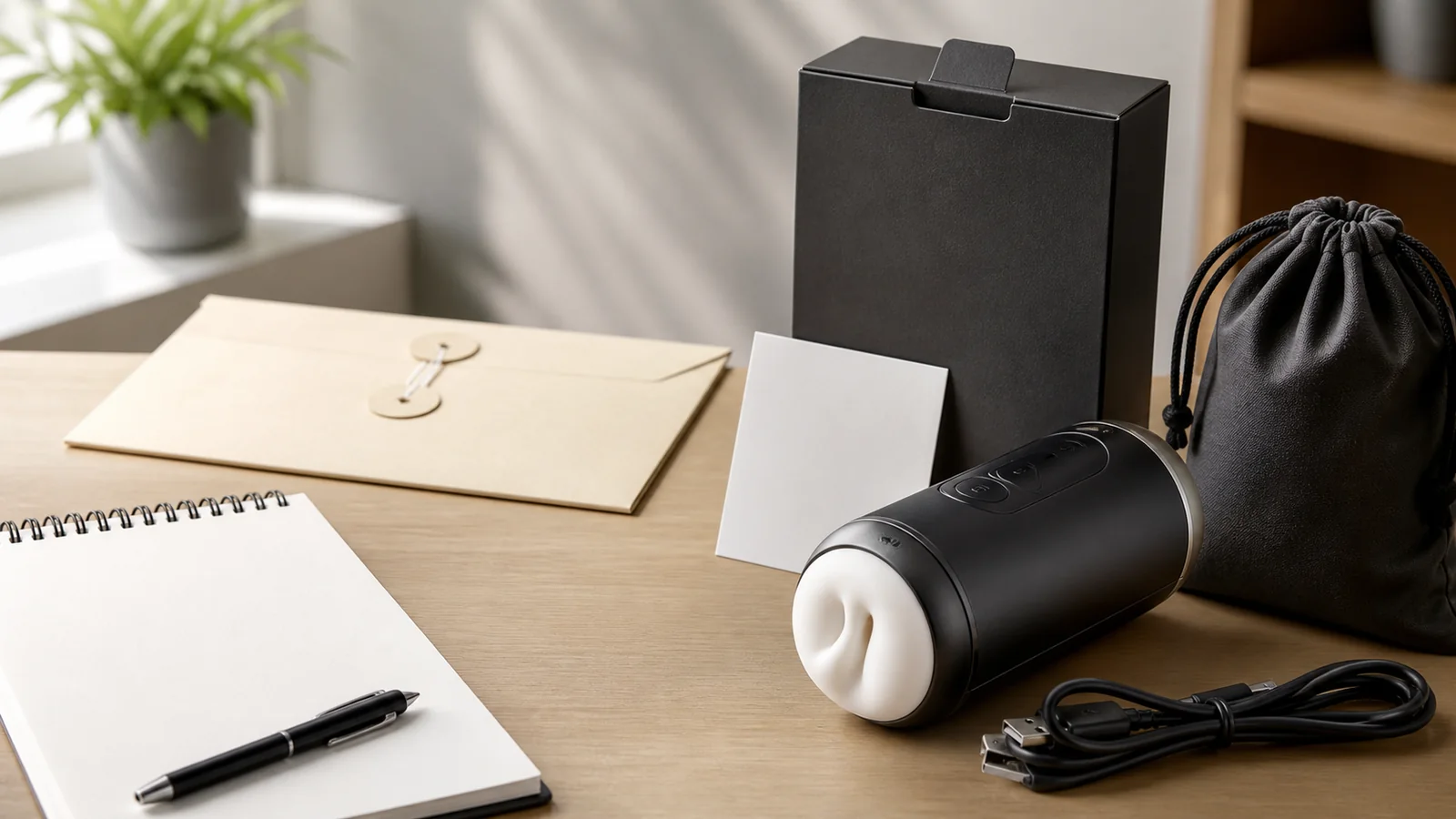
SEO title: What Is a Reasonable Price Range for an Automatic Masturbator? | LuxoVibe Guide Last reviewed: August 23, 2026
Quick answer
A reasonable price is not a single universal number. Compare the total order cost with the model's documented construction, included accessories, care requirements, privacy terms, and warranty support. A lower price can be sensible when the product information is complete; a high price alone does not establish better fit.
Why this purchase question deserves a practical answer
Price questions are really information questions. An automatic product may differ in its motor design, outer case, removable part, charging arrangement, case or pouch, and seller support. The useful task is to identify what the stated price includes and whether the product's ownership requirements match the buyer's budget and routine.
There is no single feature, price, or review that can decide the question for every adult. A more reliable process separates the facts a seller has documented from personal preferences and unanswered points. Facts can include dimensions, material descriptions, included accessories, stated water limits, cable type, and policy terms. Preferences can include drawer space, travel needs, the amount of routine care that feels realistic, and how much privacy is needed at delivery. An unanswered point is a reason to pause and ask, not an invitation to guess.
Start with the exact model and its documentation
Make a complete cost list before deciding. Include the product, delivery, taxes where they apply, compatible care supplies, a pouch or case if it is not included, and any replacement component that the manufacturer identifies. Do not assume that a product photo showing a cable or storage case means those items are inside the box.
Before comparing a feature or price, find the exact model name and read the current listing, product manual, privacy information, and returns or warranty page. Screenshots can be useful records if a policy affects the purchase decision. Product pages change, and reviews sometimes cover an older version, bundle, or seller. Keep the order confirmation and the manual after purchase so that future questions can be tied to the correct product rather than a broad category label.
What to check before checkout
| Checkpoint | What to look for | Why it matters |
|---|---|---|
| Construction | Material and a clear description of removable or electronic parts | Different parts can have different care limits. |
| Power and controls | Cable type, charging process, control explanation, and any travel lock | Helps prevent avoidable storage and charging mistakes. |
| Care | Product-specific washing, drying, and storage instructions | A realistic routine is part of a good purchase fit. |
| What is included | Cable, pouch, case, cap, or replacement component list | Product photos may show accessories that are not in every option. |
| Privacy and support | Packing, billing, returns, warranty, and official contact route | Important before an order becomes hygiene-sensitive. |
Make a comparison that reflects real ownership
Then compare information quality at each price point. Clear product material, dimensions, charging details, care directions, terms for sealed personal items, and a support route have practical value. They reduce uncertainty before purchase and make a later question easier to resolve. A vague listing should not become more convincing merely because its price is high or discounted.
Use a simple table or note with two columns: documented facts and personal priorities. Documented facts should come from the maker or seller for the exact model. Personal priorities are yours alone, such as whether you want a smaller storage footprint, a protected travel case, fewer separate parts, or a more straightforward control layout. This approach stops a comparison from becoming a contest between marketing phrases.
When product information is incomplete, ask a focused question. For example: "Which parts of this model can be rinsed?" or "Is the storage pouch included with this option?" A useful response should identify the model and provide a written answer or the correct manual. If support cannot explain a basic product-care or policy point before payment, compare another listing rather than relying on an assumption.
Need a clear product detail? Contact LuxoVibe with the model or requirement you are comparing. Submit only the information needed for the question; enquiries are handled under our Privacy Policy.
Use a staged purchase review
Breaking the decision into short stages prevents a product page from doing all the thinking for you. First, identify the exact model and the seller that will fulfil the order. Product names can be similar and a marketplace listing may not include the same accessories, manual, warranty, or support channel as the official seller. Check the variant name, colour or bundle option, stated dimensions, and what is included. If the images and written list disagree, ask which one applies to the option in your cart.
Second, check the operating information. Find the power source, charging cable or dock, control explanation, and any water-resistance statement. These details should describe the product rather than imply a result. If a product has a lock, remote, app, multiple modes, or a removable component, look for an explanation of how that element affects setup, storage, and care. A clear product diagram or manual can be more useful than a lengthy promotional description.
Third, translate the documented facts into a routine. Think through delivery, unboxing, a first inspection, charging or battery setup, cleaning, drying, and storage. A buyer who does not have a private dry place for a removable part may prefer a construction with fewer pieces. Someone travelling often may place more value on a protective case and a documented lock. The correct answer is not necessarily the smallest or most expensive item; it is the one whose normal care steps can be completed without improvisation.
Fourth, check the policy path before the item becomes hygiene-sensitive. Read the seller's pages for delivery issues, missing items, defects, unopened returns, warranty coverage, and support. Note the channel for a question and whether an order number, photo, or model name is needed. This is not about anticipating a problem. It is simply part of buying a personal product with clear expectations.
Separate evidence from marketing language
Marketing terms can help describe a product's design, but they should not replace details. Words such as compact, quiet, premium, smart, waterproof, body-safe, or powerful are starting points for questions, not complete answers. A useful listing states dimensions instead of relying only on compact, explains a measured or documented feature rather than making an absolute quiet claim, identifies materials and component boundaries, and gives the water-resistance conditions that apply to the exact model.
When a claim is important to the decision, look for the supporting information closest to the product. The manual, product specification, packaging contents, and seller's written support response are more useful than an unqualified social post. Independent reviews can provide context about handling, delivery, or how a product compares with another item, but they do not override a current care instruction. If the sources conflict, ask the seller which document applies to the product being sold now.
This habit also protects against overpromising. A personal wellness product should not be marketed as medical treatment or be expected to produce a guaranteed outcome. Product documentation can tell you how an item is built and used; individual comfort, preference, and health questions require appropriate personal judgement and, where needed, qualified advice. Clear boundaries make an article more helpful because they identify what can be verified and what should not be assumed.
Keep a concise order record
Once you decide to buy, save a small record rather than relying on memory. The order confirmation, product page, manual, price or bundle selection, delivery estimate, privacy terms, and support contact are generally enough. Store the record privately and avoid placing sensitive information in an unnecessary public review or support message. If a question arises, the model name and order number allow a seller to find the relevant documentation more quickly.
When the parcel arrives, inspect the outer package and the included components before use. Compare the product, cable, cap, pouch, or other parts with the order description. If something is missing, the seal is compromised, or a component appears damaged, document the condition and ask the seller for the next step before using the product. Hygiene-sensitive products can have different return conditions after opening, so a measured first inspection is useful for both the buyer and seller.
Keep future messages factual and brief. State the model, purchase date, order number, and the exact issue, then include only the photos or video the official support route requests. Do not dismantle a sealed electronic product, use unapproved parts, or send it back without instructions. This approach protects privacy, preserves the evidence a seller needs, and gives a better chance of an accurate resolution.
Plan the first day after delivery
The first day is a useful checkpoint because the product, its packaging, and the written instructions are all together. Verify the correct model and included parts, then read the manual before charging, washing, or changing a setting. Decide where any washable component will dry and where the device will be stored once it is fully dry. This short preparation prevents the common problem of discovering a care or storage requirement only after an item has been opened or used.
If the instructions use a term you do not understand, ask the official seller for clarification. Do not substitute advice from a different product, even when the images look similar. Product construction, charging connections, and water limits can differ across generations and bundles. A reasonable seller response should focus on the exact model and should not pressure you into treating an unclear detail as unimportant.
Take that extra minute before proceeding: clear information is part of a responsible purchase.
Care, safety, and stop-use checks
Follow the product-specific manual before applying any general advice. For a washable surface, use the approved care method, then let the product dry fully before storage. Do not use unlisted solvents, abrasives, high heat, damaged cables, or improvised power supplies. Do not charge a product that is wet. A water-resistance statement applies only to the exact model and conditions stated by its manufacturer.
Stop using the product and contact the official seller if a surface is torn, sticky, cracked, or has a loose seam; if an electronic product becomes unusually hot; if a battery housing or charging contact looks damaged; or if an included component is missing. Keep the order record, manual, and concise photos or notes needed for a support claim. Do not attempt to open a sealed electronic housing or repair it with unapproved parts.
For shared use or questions about an individual health concern, the product manual and qualified professional advice take priority. General educational information from Planned Parenthood can help with broader safer-use context, but it does not replace the model's material, charging, cleaning, or privacy instructions.
Common mistakes to avoid
Avoid using a sale countdown as the primary reason to choose a model. Check the usual price, the exact variant, delivery time, and policy details. Do not expect a general return rule to override hygiene restrictions after an item is opened. Save the listing, order confirmation, and policy page if price, warranty, or delivery promises affect the decision.
It is also worth avoiding pressure-led decisions. A countdown, an unusually high stated discount, or an assertive product claim does not answer whether the item fits your space, care routine, and budget. Take time to compare the exact model, note what is included, and check how the seller handles a delivery issue, defect, or unopened return. Choosing later with better information is preferable to choosing quickly with avoidable uncertainty.
Frequently asked questions
Does a higher price guarantee safer materials?
No. Material safety depends on clear product-specific information and appropriate care, not price alone. Compare what the listing actually identifies.
What costs are easy to overlook?
Delivery, local taxes, compatible care items, storage, and the difference between a product shown with accessories and a product sold with them.
Should I wait for a discount?
A discount can be useful, but only after you have confirmed the exact product, final price, terms, and support information.
Conclusion
The best automatic product decision is a documented one. Choose a model whose construction, controls, care steps, storage needs, privacy terms, and support route match your own routine. A clear listing, an accurate manual, and a seller willing to answer a model-specific question are more valuable than a generic promise.
Need help choosing a product direction?
LuxoVibe can clarify catalog information, care documentation, product details, and ordering questions before you decide. Browse the product catalog or contact the team. Please include only the information needed for the request; see our Privacy Policy for details.
Related resources
- Read our guide to evaluating material and safety information.
- Compare a related purchasing question in this LuxoVibe guide.
- For general sexual-health education, see Planned Parenthood's resource; always follow the exact product manual for care and charging.