
Consumer wellness guide - 11 min read
How Can I Evaluate Material and Safety Information for Lingerie?
Evaluate lingerie fabric composition, construction, dyes, hardware, care labels, sensitive-skin considerations, fit, and return information before ordering.
SEO title: Lingerie Material and Care Guide | LuxoVibe
Meta description: Evaluate lingerie fabric composition, construction, dyes, hardware, care labels, sensitive-skin considerations, fit, and return information before ordering.
URL slug: /blog/how-can-i-evaluate-material-and-safety-information-for-lingerie
Last reviewed: August 24, 2026
Quick answer
How Can I Evaluate Material and Safety Information for Lingerie starts with the exact item, not a broad category claim. Check the written materials or fabric information, operating or care instructions, selected variation, storage routine, delivery terms, and official support route. Compare those facts against your own priorities, and pause when a key detail remains undocumented. This approach makes the decision calmer, safer, and easier to revisit after delivery.
Introduction
How Can I Evaluate Material and Safety Information for Lingerie? is best treated as a practical ownership and decision question, not a search for one universal answer. Products and garments that share a category name can differ in construction, materials, controls, care instructions, storage needs, delivery presentation, and return terms. A reliable decision starts with the exact item rather than a broad label. This guide is written for adults and provides consumer education, not medical, legal, or personal advice.
The most useful information is specific enough to check. Keep the current product page, care label or manual, order confirmation, and policy pages together while you compare. That record helps distinguish a confirmed fact from a hopeful assumption. It also makes it easier to ask a seller a precise question before an order is placed or a hygiene seal is opened.
Begin with the exact model and its written information
Start by confirming the model name, colour or size variation, included parts, and the date of the information you are reading. Product photos are helpful, but a photograph cannot confirm a hidden closure, a charging-port cover, a seam, a lining, a removable component, or a revised size range. Look for a written manual, size chart, materials list, care label, and contact route that apply to the exact item in your cart.
Create three short lists: facts the seller documents, your own priorities, and questions that remain open. Facts may include stated fabric composition, dimensions, closure type, powered-component limits, washing instructions, or the policy that applies to unopened goods. Priorities may include quiet controls, adjustable fit, a simpler care routine, travel storage, or a specific price limit. Open questions should be resolved before checkout rather than filled in by a review photo or a general claim.
| Checkpoint | What to confirm | Why it matters |
|---|---|---|
| Exact variation | Model, colour, size, and included items | Prevents comparing a different version. |
| Construction | Materials, seams, closures, controls, or hardware | Affects comfort, care, and durability. |
| Care | Written cleaning, drying, charging, or washing steps | Supports a repeatable ownership routine. |
| Storage | Pouch, drawer space, separation, and temperature guidance | Helps protect the item and maintain privacy. |
| Support | Policy pages and an official contact channel | Gives a clear route if an order is incomplete or damaged. |
Use materials as a decision process, not a marketing claim
Broad claims such as premium, safe, discreet, powerful, luxury, or beginner-friendly do not replace a model-specific explanation. A careful buyer asks what the product is made from, how it is adjusted or operated, which parts require separate care, and what happens if the delivered item is not the documented item. A supplier or retailer should be able to point to current information instead of relying on vague reassurance.
When a product has a battery, cable, removable piece, elastic, metal hardware, delicate fabric, or a sealed personal-use component, the care plan may have more than one step. Read the manual or label before attempting cleaning or charging. Do not improvise with harsh solvents, abrasive tools, unapproved chargers, unverified repair methods, or washing conditions that the care instructions do not support. If information is missing, pausing is a reasonable consumer decision.
Compare real ownership factors before price or appearance
Price and appearance can help shortlist options, but they do not explain the total ownership routine. Compare two or three candidates in a simple worksheet. Give each one the same questions: What is included? What is the stated material? How is it cleaned or washed? What must be dry before storage? Does the fit or sizing guidance explain the selected variation? Does the official policy explain returns, warranty, delivery issues, and support?
A comparison becomes more trustworthy when evidence is traceable. A useful customer review identifies the exact version, date, and a practical situation. A useful product page identifies actual materials, care limits, and the supplied accessories. A useful policy page tells a buyer when to report a missing, incorrect, or visibly damaged delivery. None of these sources is perfect alone, but together they make a more grounded decision than a star rating or a styled image alone.
Check care, condition, and delivery with the same level of care
Follow the supplied instructions first. Before first use or wear, inspect the item in good light. Look for tears, rough edges, broken closures, exposed wiring, unusual stickiness, staining, missing parts, or a damaged cable. Photograph an incomplete or visibly damaged parcel before altering the package, keep the outer packaging when practical, and contact the official support route with the order number. This is a consumer arrival check; it should not be confused with factory testing or shipment inspection performed for a production order.
For a powered product, charge only with the provided or documented compatible equipment on a dry, ventilated surface. Stop if a cable, port, housing, or battery area is damaged or unusually hot. For a garment, follow the garment-specific care label rather than assuming every lace, mesh, elastic, dye, or fastening can be washed in the same way. Drying and storage are part of care, not an afterthought: moisture, friction, compression, or contact with incompatible materials can shorten useful life.
Plan privacy, delivery, and support before checkout
Privacy is more than the exterior of a parcel. Review account information, billing descriptor information when supplied, delivery notifications, order-history retention, support channels, and the return process. Use an email account and delivery location you can access reliably. Save the order confirmation and current policy pages privately; a saved record can be more useful than trying to recreate a listing after it changes.
Support information is a trust signal when it is precise. Confirm the official email address, contact form, response expectations if stated, and whether the seller distinguishes an unopened return, a damaged delivery, a manufacturing fault, and a change-of-mind request. Hygiene-sensitive and customised goods may have conditions once opened or worn. Read those conditions before purchase, not when a return is already time-sensitive.
A practical pre-order and post-delivery checklist
Before ordering, you should be able to state the exact item, the information source that supports your selected variation, the care routine, the storage plan, and the support route. After delivery, check the outer parcel, product name, selected variation, included parts, and visible condition against the order confirmation before opening seals or attempting to charge, wash, or wear it. If an important fact is still unclear, ask a narrow question and wait for a written answer.
This approach supports good product application and makes later conversations with a seller more efficient. It also applies to a buyer preparing an installation or care routine: identify the clean, dry place where the item will be checked, charged, washed, dried, and stored before it becomes part of a regular routine. Practical preparation is usually more valuable than an extra feature that cannot be explained clearly.
Lingerie-specific checks for materials
For lingerie, the fit process is central. Use the current size chart for the exact garment and take measurements in the way that chart asks. A size name alone is not a consistent standard across brands. Look at cup, band, waist, hip, torso length, strap adjustment, closure positions, and the amount of stretch stated for the fabric. Compare the chart to a garment that already fits you rather than relying on a single size label.
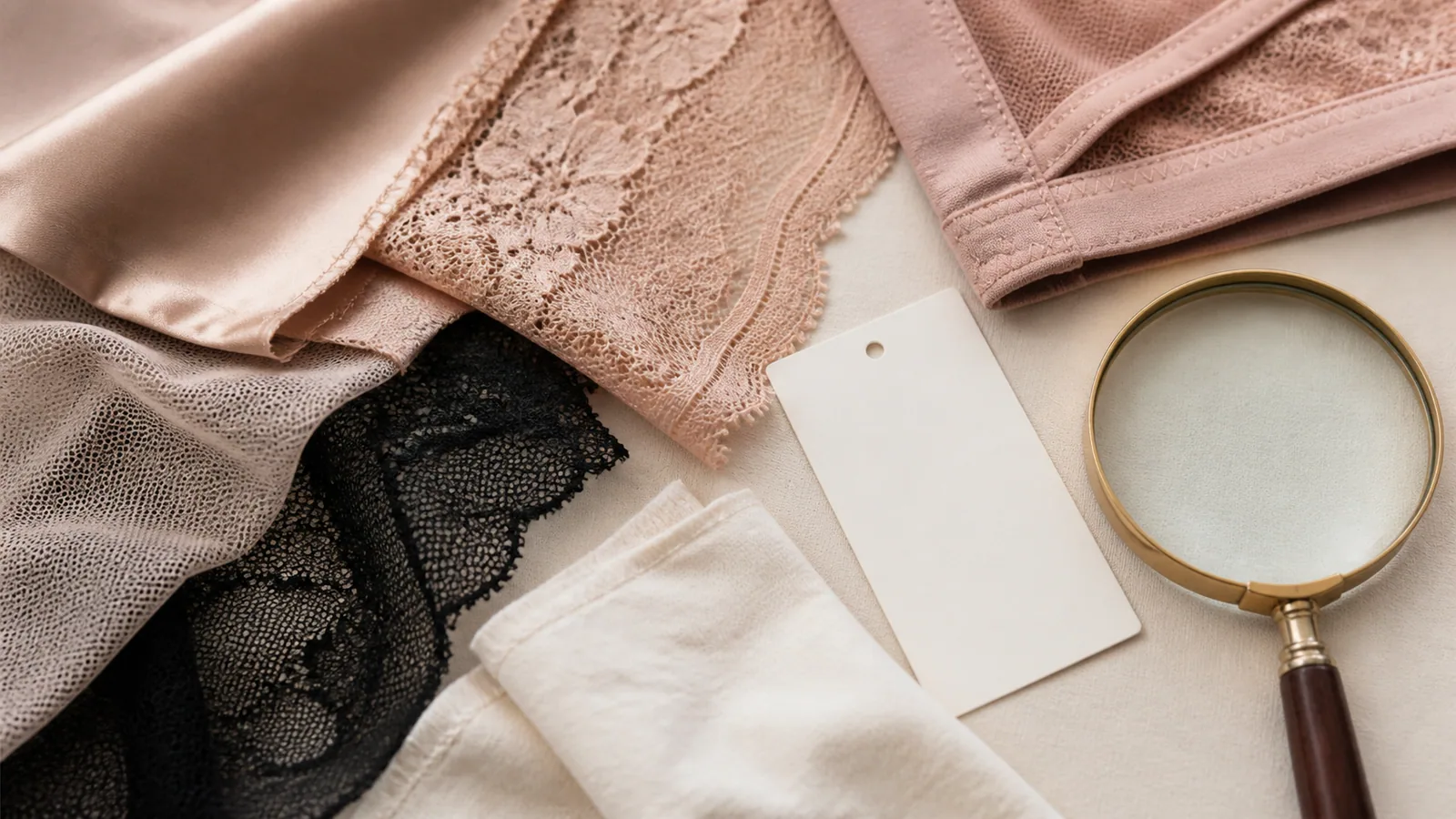
Fabric composition should be read with construction. A lace panel, elastic edge, mesh section, lining, hook, underwire, plastic adjuster, or metal ring can each have a different care concern. Sensitive skin, fragrance, dyes, and laundry products may also matter to an individual buyer. Do not claim that a fabric will suit every person; use the documented fibre content and care label, then make a cautious personal decision. Stop wearing a garment if it causes pain, numbness, persistent marks, rash, or another concerning reaction, and seek appropriate professional advice when needed.
For care, fasten hooks, place delicate pieces in a mesh bag if the label permits machine washing, use the stated water temperature, and avoid heat that can weaken elastic or adhesives. Reshape while damp when appropriate and store bras or structured pieces so cups and hardware are not crushed. These modest habits are more useful than promising a fixed garment lifespan because actual wear, washing, storage, and fabric blends vary.
How to use reviews, product pages, and policies together
Use each source for what it can realistically tell you. The manufacturer or retailer's current documentation is the best place to verify the exact variation, listed materials, included parts, controls, care limits, size guidance, and official contact route. The policy pages explain the commercial process: privacy, delivery, reporting deadlines, unopened returns, warranty handling, and support. Customer reviews can add lived context, especially when they identify the model, date, and a concrete ownership issue, but they should not overrule the current manual or label.
It is reasonable to look for consistency across these sources. If a listing says an item can be rinsed, the manual should clarify which parts, what must be removed, and how it should be dried. If a size range appears broad, the chart should show the measurements and stretch assumptions behind it. If a seller mentions a warranty, its policy should explain what it covers and how to make a claim. A discrepancy is a question to send to the seller, not a detail to ignore.
Ask better questions before you buy
Good pre-purchase questions are short and model-specific. Ask: Which material touches the body or skin? Which components can be washed or rinsed? Is a charger, pouch, mesh bag, or care card included? Which policy applies once a hygiene seal is opened or a garment is worn? How should a delivery issue be reported? A clear answer can prevent a difficult decision after the order arrives.
For an overseas order, also ask which version of an instruction or care label will accompany the item and whether there are destination-specific requirements. Business buyers evaluating a range for resale may need more formal material records, factory testing information, shipment inspection criteria, packaging specifications, and market documentation. A consumer should not infer those records exist for a retail item unless the seller provides model-specific evidence. The useful standard is accuracy, not an exaggerated claim of compliance.
Common mistakes to avoid
The first mistake is comparing unlike items as though every attribute has the same meaning. A simple non-powered product, a rechargeable product, and a delicate garment can have very different care and return requirements. The second is buying an undefined variation: a size, colour, fabric, accessory kit, or revision can change what arrives. The third is treating a styled image as a specification. Images help assess finish and presentation; they do not substitute for dimensions, composition, care, or policy terms.
Another mistake is postponing storage and care decisions. Identify a clean, dry, private place before ordering. Decide how the item will be cleaned, dried, protected from damage, and kept separate from incompatible materials. A modest product with a clear routine is usually easier to own than a feature-heavy option whose documentation is unclear. Finally, do not wait until after an issue to find the support route. Save the correct contact page and order records when the purchase is made.
Frequently asked questions
Is the most expensive lingerie always the better choice?
No. Price can reflect materials, construction, included accessories, design, distribution, or packaging, but it does not prove that the exact item fits your needs. Compare the documented variation, care routine, policies, and support route before deciding.
Can reviews replace the product instructions?
No. Reviews can reveal questions to investigate, but the current manual, care label, size chart, and official policy should guide decisions about the exact item in your cart. Check dates and version details when reviews appear to conflict with current information.
What should I do if the delivered item is incomplete or damaged?
Pause before opening hygiene seals, washing, charging, or wearing it. Photograph the parcel and contents, retain the order number and packing material, and contact the official support channel with a concise description of the issue.
When should I stop using or wearing the item?
Stop if there is pain, persistent irritation, numbness, discoloration, unusual heat, damaged material, exposed wiring, a broken closure, or another concerning issue. Follow the exact instructions and seek appropriate professional support for symptoms that are severe or do not settle.
Conclusion
The strongest purchase decision is built from documented information and a routine you can genuinely follow. For lingerie, confirm the exact variation, written construction or material information, care needs, storage plan, delivery conditions, and official support route. Use reviews and product imagery as supporting context, not as proof. A decision that remains clear after the parcel arrives is more valuable than one based only on a broad promise.
Related resources
- Explore documented product categories in the LuxoVibe catalogue.
- Send a model-specific question through LuxoVibe contact before ordering.
- Read how personal data is handled in the Privacy Policy.
- For general sexual-health information, consult Planned Parenthood's educational resources.
Need help choosing a product direction?
For a documented product question, size or care clarification, or a request for a catalogue, contact LuxoVibe with the exact model or category you are considering. Include the destination market, preferred format, and any must-have information so the team can direct you to the relevant product documentation. Send your requirements or browse the product catalogue.