
B2B sourcing guide - 11 min read
How to Write an Effective OEM / ODM RFQ for Adult Wellness Products
Prepare a clearer adult wellness OEM or ODM request for quotation with product, market, packaging, quantity, compliance, and delivery details.
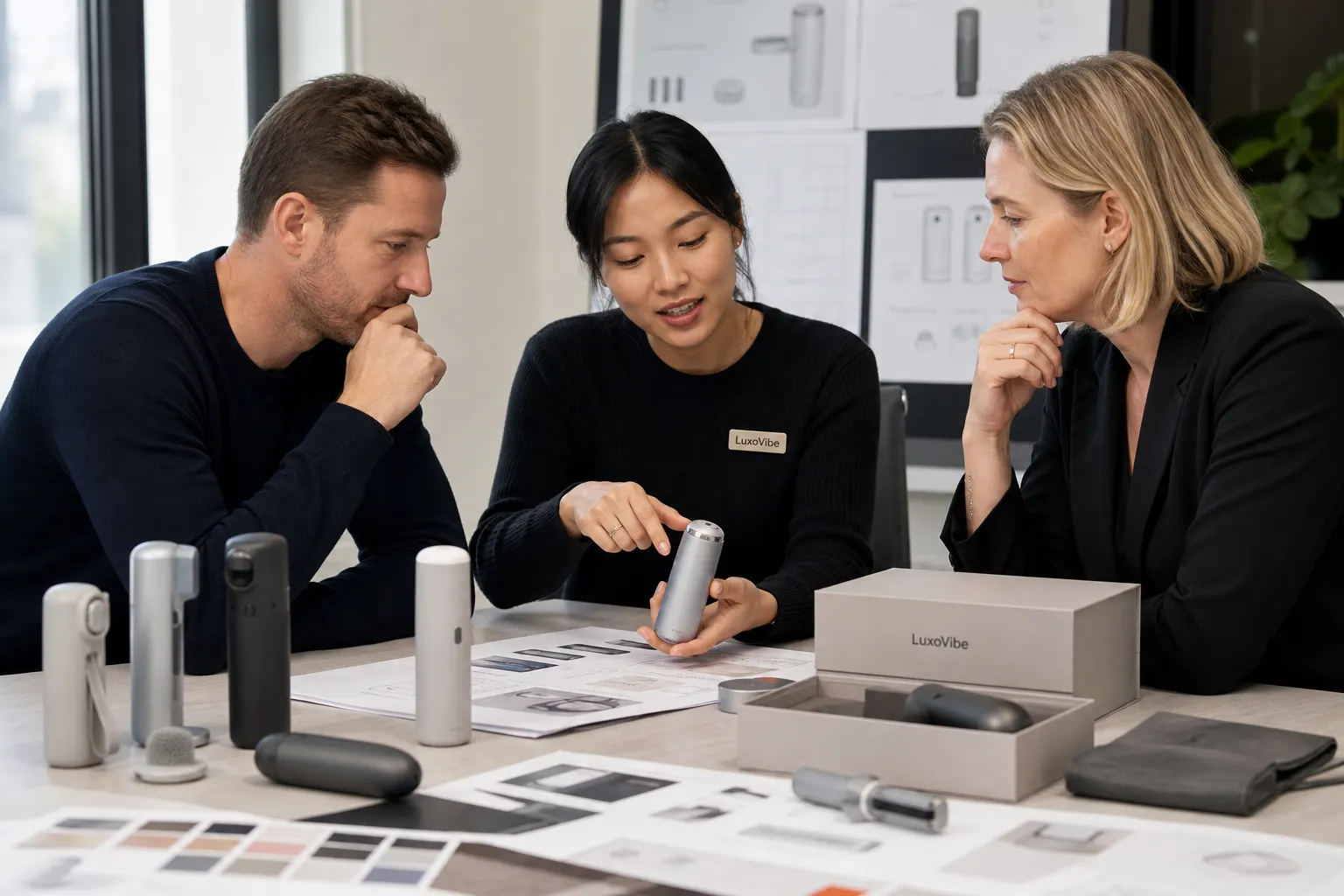
An RFQ, or request for quotation, is more useful when it explains the commercial decision behind the product. A photo and a target price can start a conversation, but they rarely give a supplier enough context to compare product platforms, sample options, packaging requirements, documentation questions, and delivery planning. A clear RFQ helps a buyer receive a clearer answer: what is available, what needs to be confirmed, and which choices may change the project scope.
The short answer: what belongs in an OEM or ODM RFQ?
Include the target market, product direction, customization scope, packaging expectation, estimated quantity, launch timing, destination, and the questions your team needs answered before approval. The purpose is not to write a long technical specification on day one. It is to make the first quotation and sample discussion relevant to the retail program you are planning.
For an established platform, identify what you want to keep standard and what you want to make distinctive. For a more custom OEM project, describe the problem the product should solve, the non-negotiable features, and the decisions that are still open. That distinction helps prevent a logo-and-packaging project from being quoted as a full custom-development program, or the reverse.
Start with the commercial route, not only the product photo
Suppliers need to understand where the product will be sold and how it will be presented. A boutique gift set, a distributor catalog item, a marketplace listing, and a private-label launch can all need different packaging, instructions, price positioning, and delivery expectations. State the retail route in one or two sentences before listing the product features.
Useful context includes the countries or regions you intend to serve, whether the range is a first launch or a replenishment program, the expected shelf or online price position, and whether discreet outer shipping is relevant. These details help the product team identify the questions that affect the quotation rather than treating every request as a generic catalog inquiry.
Define the product platform and customization scope
Describe the product category and the closest available platform, then separate your requests into standard, selectable, and custom items. For example, a buyer may start with an existing rechargeable format while choosing a color, finish, logo position, insert card, and carton artwork. Another buyer may need an engineering discussion about shape, controls, charging method, or a new packaging structure.
Avoid phrases such as "make it premium" without a reference. Explain what premium means for your range: a quiet color palette, a soft-touch finish, a heavier retail carton, a particular material direction, a retail set, or a more considered unboxing sequence. Provide reference images when you have the rights to share them, but explain which feature in the image matters. This is more helpful than asking a supplier to copy an entire product without a clear scope.
Give quantity, launch timing, and delivery context
Quantity is not only a price field. It can influence packaging choices, print runs, sampling priorities, shipment planning, and whether a custom request is commercially practical. Give an estimated range if the final number is not approved. A range is usually more useful than a placeholder quantity because it lets the supplier explain what may change between a pilot order and a scaled program.
Include the desired launch window and the destination or shipping arrangement you expect. Do not ask for a guaranteed lead time before the product, artwork, documentation, and sampling path are understood. Instead, ask which decisions must be approved before production can be scheduled, and which changes would move the timeline.
Specify packaging, logo, instructions, and retail requirements
Packaging is often where a private-label product becomes a retail collection. State whether you need a simple branded carton, a gift-ready set, inserts, pouches, instruction cards, barcode labels, or outer-carton marks. If your brand guide exists, share it. If it does not, describe the intended color direction, typography tone, finish, and reference market position.
Instructions and product information should be treated as part of the RFQ, not an afterthought after printing starts. Tell the supplier the planned languages, destination market, selling channel, and any customer-support requirements your team has identified. The final content and documentation obligations depend on the product and market, so this section should start a practical review rather than make a blanket compliance claim.
Ask focused questions about documentation and market readiness
A useful RFQ asks for evidence in a way that matches the project stage. At the first quotation stage, you may ask what documentation is generally available for the product platform, what information the supplier needs for a destination-market discussion, and when product-specific records can be reviewed. During sampling, the questions become more specific: which approved sample version is being referenced, what materials and components are used, and what checks will be recorded before shipment.
Be precise about what you are asking for. "Please send all certificates" is less useful than "Please explain which current product documents can be reviewed for this rechargeable configuration and what additional market information is needed." Clear questions lead to clear boundaries and fewer assumptions.
Use an RFQ checklist your internal team can approve
Before sending an RFQ, confirm that the following points are complete or clearly marked as open:
- Target market, retail channel, and intended customer position.
- Product category, reference platform, desired functions, and any must-have features.
- Material, color, finish, and product branding direction.
- Packaging format, inserts, instructions, language needs, and label requirements.
- Estimated quantity range, target launch window, and delivery destination.
- Required documentation discussion and the person responsible for reviewing it.
- Sample approval process, decision owners, and preferred next step.
Send your RFQ to LuxoVibe
Send the information you have to LuxoVibe, even if several fields are still open. A structured first message gives the team a practical basis for recommending an existing platform, a sampling route, or a focused OEM/ODM discussion.
FAQ
Do I need a finished design before requesting a quote?
No. An RFQ can begin with a product direction and commercial context. Clearly separate confirmed requirements from items that need supplier input, such as available colors, packaging structure, or sample options.
Should I include a target price?
You may share a target position if it helps frame the project, but it should not replace product, packaging, quantity, and delivery context. A supplier needs enough detail to explain what the target would include and what it would not.
Can one RFQ cover several product categories?
Yes, provided each category has its own reference, quantity range, packaging level, and priority. A short table or separate sections keep the response easier to compare internally.
Conclusion: a precise RFQ produces a useful quotation
A professional RFQ gives both sides a shared starting point. It tells the supplier what the buyer is trying to launch, which parts are settled, and which questions need expertise. That usually produces a more relevant quotation, a better-organized sample review, and fewer late-stage changes to packaging or product expectations.
Send your RFQ to LuxoVibe
If you are planning a private-label wellness range, contact LuxoVibe with your product direction, target market, quantity range, and any packaging or documentation questions.