
Consumer wellness guide - 12 min read
Vibrating Egg Controls: Buttons, Remote, or App? A Buyer Guide
Compare vibrating-egg button, remote, and app controls by documented setup, permissions, updates, care, privacy, and support before buying.
Materials, Cleaning & Storage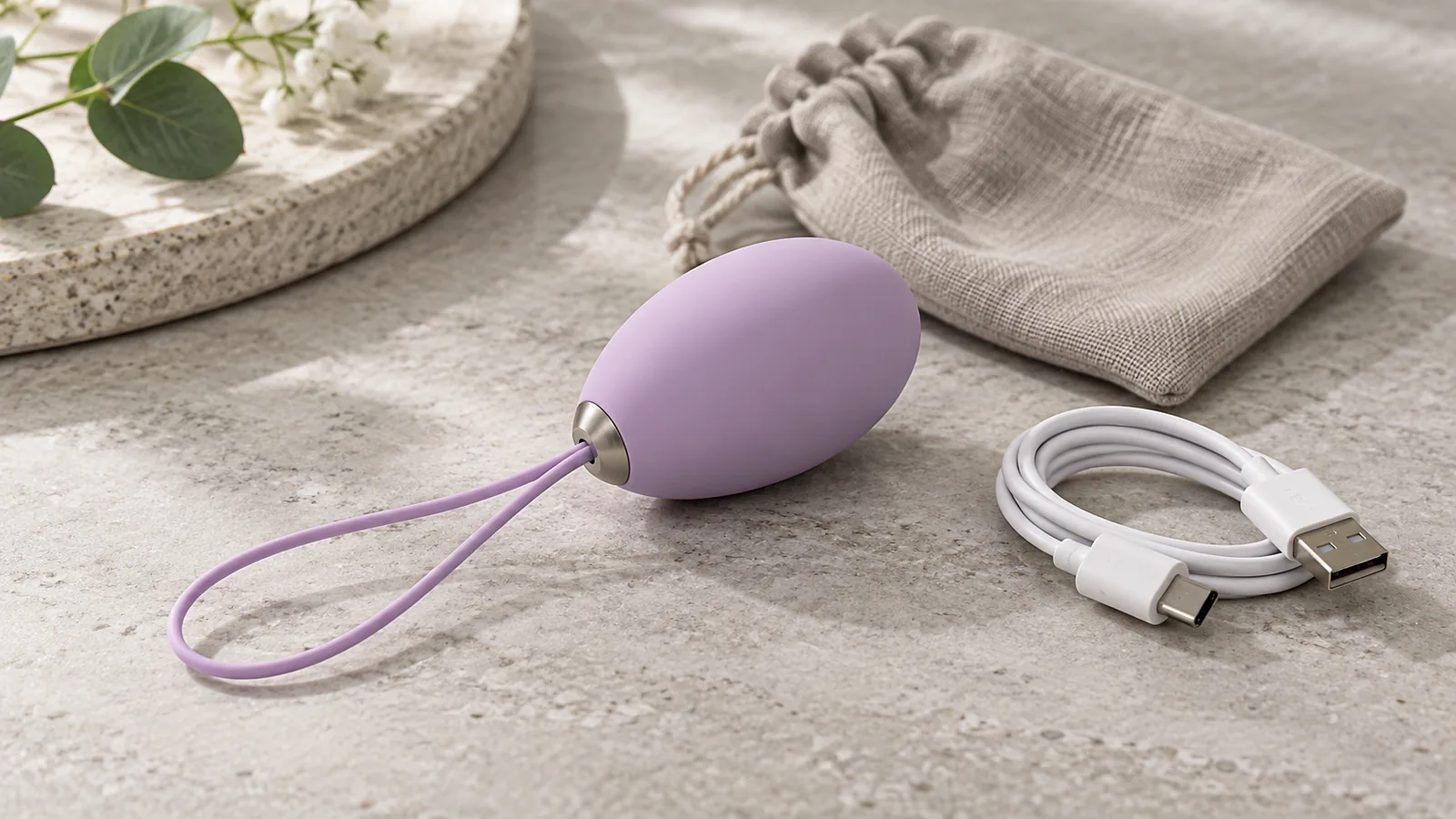
Need a documented answer?
Ask one focused product or sourcing question.
Tell our team the exact model, market, material, care, packaging, or quantity detail you need to confirm. We will help route your enquiry to the right next step.
SEO Title: Vibrating Egg Controls: Buttons vs Remote vs App | LuxoVibe Meta Description: Compare vibrating-egg button, remote, and app controls by documented setup, permissions, updates, care, privacy, and support before buying. URL Slug: /blog/vibrating-egg-controls-remote-app-buyer-guide Last reviewed: September 29, 2026 Target keyword: vibrating egg remote control app
Quick answer
Choose vibrating-egg controls by what the exact model documents: physical buttons, a separate remote, or an app; the required setup; supplied accessories; privacy and permissions; updates; and support. More control options are not automatically more useful. A buyer should select the simplest system that meets their documented requirements and can be operated and cared for as directed.
Introduction
Control choice affects more than patterns or a marketing checklist. It can affect whether a buyer must keep a separate remote, install an app, create an account, review permissions, or learn a pairing process. These are ownership questions. They deserve the same attention as material wording and dimensions, especially where a listing uses broad language like 'smart', 'wireless', or 'long-distance'.
Evaluate the control system as a complete ownership system
Begin with a single question: what is required to operate this exact variant? A one-button device, a multi-button body, a separate remote, and an app-connected device are different systems even if their silhouettes look alike. Save the product manual, package contents, app-store listing where applicable, seller privacy link, and any compatibility statement. Do not infer features from a screen mock-up or a review of a previous version.
| Control route | Facts to compare | Questions to ask before checkout |
|---|---|---|
| On-device buttons | Button count, lock, indicator, manual | Can the documented controls be understood without an app? |
| Separate remote | Included remote, batteries/charging, pairing | Is the remote covered by the support policy? |
| App connection | Device compatibility, account, updates, permissions | What information or permissions does the app request? |
Keep privacy practical. Review the seller's privacy notice and, if relevant, the app developer's data statement before providing information. Avoid placing account passwords, payment details, or sensitive personal information in a support message. If a feature is not necessary for your purchase goal, you do not need to accept unclear collection or permissions merely because they are presented in the setup flow.
Need one documented product fact? Contact LuxoVibe with the exact model and one question about dimensions, material wording, charging, care, delivery, or support. Share only information needed to identify the item; the Privacy Policy explains the inquiry context.
Prepare for arrival and ownership
Before opening a delivery, create a clean, dry, private surface and keep the order confirmation, product page, and current directions nearby. This is sensible consumer preparation, not a claim that a retail item has passed factory testing or a pre-shipment inspection. Compare the received variant, visible accessories, charging lead or controller, and instructions with the written record saved at checkout. If a material difference appears, take factual photographs and contact the seller before modifying the item, discarding packaging, or charging a powered product.
Inspect only as far as the maker's directions permit. Look for intact surfaces, a clear cord or retrieval feature where the design includes one, undamaged joins, and the supplied care information. Do not improvise an attachment, replace a cable with an unknown connector, or assume that an image of a similar version verifies the model in hand. A buyer's arrival check is modest but useful: confirm the exact model, visible components, directions, and any discrepancy with the saved listing.
Keep the product record after delivery. Record the seller, exact model, order date, delivery estimate, checkout total, policy links, and support contact. This practical file makes a warranty, missing-accessory, delivery, or privacy question easier to explain without sending unnecessary personal information. It also separates verifiable facts from marketing terms such as "premium," "whisper quiet," "body-safe," or "waterproof," which need a stated scope before they can guide a purchase.
Turn marketing language into questions you can answer
Product listings can be helpful, but they also compress a great deal into short phrases. "Quiet," "smart," "skin-safe," "waterproof," "long range," and "easy to clean" are not comparable facts on their own. For each phrase, write the related question beside it. A quiet claim becomes: does the exact current specification state a testing method, distance, operating mode, and result? A water claim becomes: what level of exposure does the maker describe, and what does it say about the charging area? A material claim becomes: which contact component is identified, and is there a current care instruction? If the answer is absent, leave the item as unverified rather than converting a marketing phrase into a promise.
This method also makes comparisons fairer. Use the same fields for every model: exact variant, surface material wording, stated dimensions, control method, power and charging record, cleaning boundary, supplied accessories, shipping terms, return terms, warranty scope, and official support. The point is not to create a spreadsheet that looks technical. The point is to identify the two or three facts that genuinely change an ownership decision. A buyer who values an uncomplicated physical control should not be pushed toward a feature-heavy app because the listing is more elaborate; a buyer who needs a clearly documented charging routine should not accept missing care information because a product has an attractive image.
Do not treat factory language as a consumer guarantee. In a business order, a manufacturer may discuss sample approval, component checks, packaging review, or shipment inspection. Those general processes can matter to a wholesale buyer, but they do not establish that an individual retail product has been tested, certified, or is right for a particular person. For an individual order, the honest evidence is narrower: the current listing, package contents, maker directions, a careful arrival check, and a written response from the official seller. That boundary protects both the customer and the credibility of the guide.
Price can be compared with the same discipline. Start with the total price at checkout, including shipping, tax, and any required accessory-not a crossed-out price or a category range. Then list what the model actually includes and what the seller actually promises after delivery. A lower price is not automatically poor value, and a higher price is not proof of better construction, privacy, or support. The most defensible purchase decision is one whose total cost, included components, terms, and unanswered questions are visible before payment.
Use a short decision record after reading the page
Finish research with a three-part note: confirmed, unclear, and not relevant. Confirmed facts come directly from the current model page, manual, policy, or official support reply. Unclear facts are the questions that have no credible answer yet. Not relevant items are features that sound impressive but do not support the buyer's stated requirement. This note prevents a buyer from mistaking a long feature list for a complete product record and makes a short support request precise.
For example, a useful inquiry might ask whether the current listed variant includes the pictured controller and which written cleaning direction applies to the charging point. It should not ask a seller to guarantee comfort, a medical outcome, or an undocumented performance result. Keep the message factual, include the exact model name, and preserve the reply with the saved order record. A clear answer helps; an evasive answer is information too.
Keep support questions narrow and useful
Ask one question at a time and use wording that can be answered from documentation. Good examples include: "Does the current package for this model include a dedicated remote?"; "Which material does the product page identify for the contact surface?"; "Where are the current cleaning directions for the charging area?"; and "Which policy applies if the delivered variant does not match the order?" These questions are objective, easy to preserve in writing, and more likely to produce an answer that can guide a decision.
Avoid turning a support request into a request for certainty that the seller cannot honestly provide. A product team should not promise a health benefit, a universal fit, a particular sensation, an unmeasured sound level, or an outcome for a named person. It can provide the exact model's listing, manual, policy, and availability information. This distinction is part of trustworthy consumer content: it respects the reader's privacy while keeping medical and personal suitability questions where they belong.

Evidence and limits for this guide
This is adult consumer education, not medical advice, a diagnosis, or a promise about comfort, performance, compatibility, or an individual outcome. The useful facts are the exact current model, its supplied directions, and the seller's written policies. If pain, bleeding, numbness, a recent procedure, pregnancy, a health condition, or any other personal concern makes a decision uncertain, pause and speak with a qualified clinician.
Planned Parenthood's sex-toy guidance advises using products made for their intended purpose, following maker care directions, and considering non-porous materials for products used internally. It also notes that sharing can transmit infections and that a product should be cleaned before it touches another person's genitals. Those are general safety boundaries; they do not verify the material, construction, or condition of an individual listing.
The online-buying checks here are based on FTC online-shopping guidance: compare sellers, read the complete description and return terms, understand total cost, keep receipts and emails, and review privacy information. The FTC's review guidance is equally relevant: consult several sources, read past the star rating, and look for context about the exact model and any incentive.
Control-system checklist
- Confirm whether the model uses buttons, a remote, an app, or a combination.
- Save the current manual and package list, including the exact controller or cable.
- Read device compatibility, account, update, and permission information before installing an app.
- Check which seller or developer provides support for a pairing or update problem.
- Keep a private record of the model and order number; do not send passwords or payment details to support.
- Test delivery contents against the saved list before following setup directions.
- Do not rely on a category-level 'smart' label to prove a specific function.
Frequently asked questions
Can a product use both a remote and an app?
Some models may offer more than one control route, but the current listing and manual must confirm it. Check the exact variant and supplied accessories rather than assuming a feature from a product family.
Does an app-connected product require a public profile?
That depends on the app's current account and privacy design. Read its data statement, permissions, and settings before installation; do not assume a social feature is mandatory or optional.
What should I do if pairing instructions are missing?
Do not guess or download an unrelated application. Keep the package and order record, then ask the official seller for current directions for the precise model.
Conclusion
Choose vibrating-egg controls by what the exact model documents: physical buttons, a separate remote, or an app; the required setup; supplied accessories; privacy and permissions; updates; and support. More control options are not automatically more useful. A buyer should select the simplest system that meets their documented requirements and can be operated and cared for as directed. Keep the decision grounded in the exact product record, current directions, and written seller terms. Clear documentation, a modest delivery inspection, and an official support route are more trustworthy than a broad category claim or a pressure-filled recommendation.
Related resources
- Browse the LuxoVibe catalog, factory overview, contact page, and Privacy Policy for current information.
- Compare adjacent formats with wearable vibrator features, remote-control vibrator features, app-controlled vibrator compatibility, and water-resistance claims.
- For broad adult-product context, see material information, cleaning guidance, and private online shopping.
Need help choosing a product direction?
Ask for product catalog information or send your requirements with the exact model and the one fact you need confirmed. Share only necessary details and review the Privacy Policy for the inquiry process.
Inquiry popup plan
Trigger suggestion: Show after 40% scroll or 30 seconds; use exit intent only after the buyer checklist is visible. Title: Need a product detail clarified? Copy: Send the exact model and one factual question about dimensions, materials, care, charging, delivery, or support. Required fields: Name, Email, Phone. Optional: Exact model and question. Submit button: Send Your Requirements.



Ready when you are
Get the product information your next decision needs.
Request catalog context, a specification check, or a private-label conversation from LuxoVibe.